Installing security cameras is one of the smartest steps you can take to protect your home. However, simply buying cameras is not enough. Security camera placement plays a major role in how effective your system actually is.
Many homeowners install a security camera but later realize it is pointing in the wrong direction, missing key areas, or recording useless footage. Poor cam placement can create blind spots, reduce image clarity, and fail to capture important details like faces or license plates.
This detailed guide explains home security camera placement in a clear and simple way. You will learn where to place home security cameras, how high to mount them, how to cover all entry points, and how to avoid common mistakes, both indoors and outdoors.
Why Security Camera Placement Is So Important
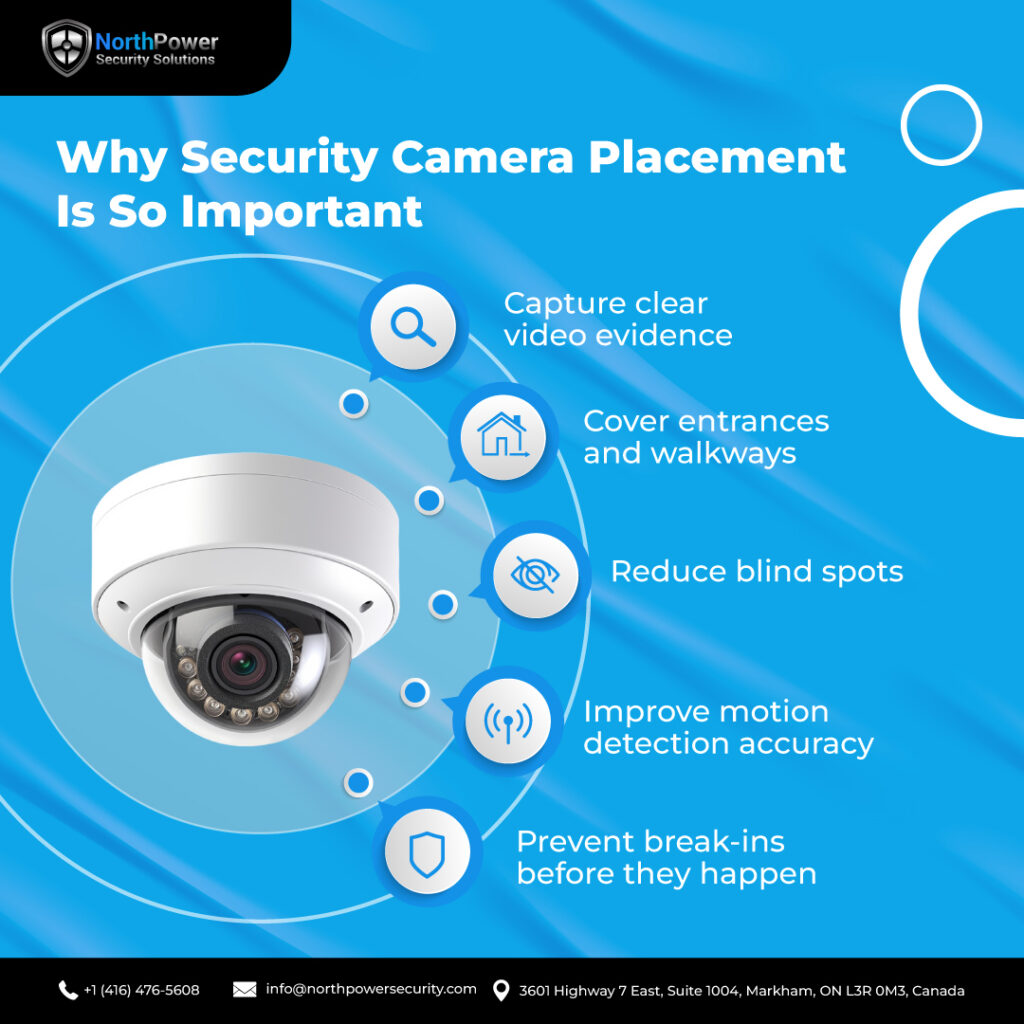
Good placement of security cameras helps your system:
- Capture clear video evidence.
- Cover entrances and walkways
- Reduce blind spots
- Improve motion detection accuracy.
- Prevent break-ins before they happen
According to the FBI, residential burglaries account for over 60% of all burglary cases, and most intrusions occur through easily accessible entry points like doors and windows. Poor security camera placement can cause these areas to go unmonitored.
Even high-quality cameras will not work properly if the security camera placement is wrong. Correct positioning gives you full CCTV camera coverage and better security overall.
Home Security Camera Placement: Basic Rules to Follow
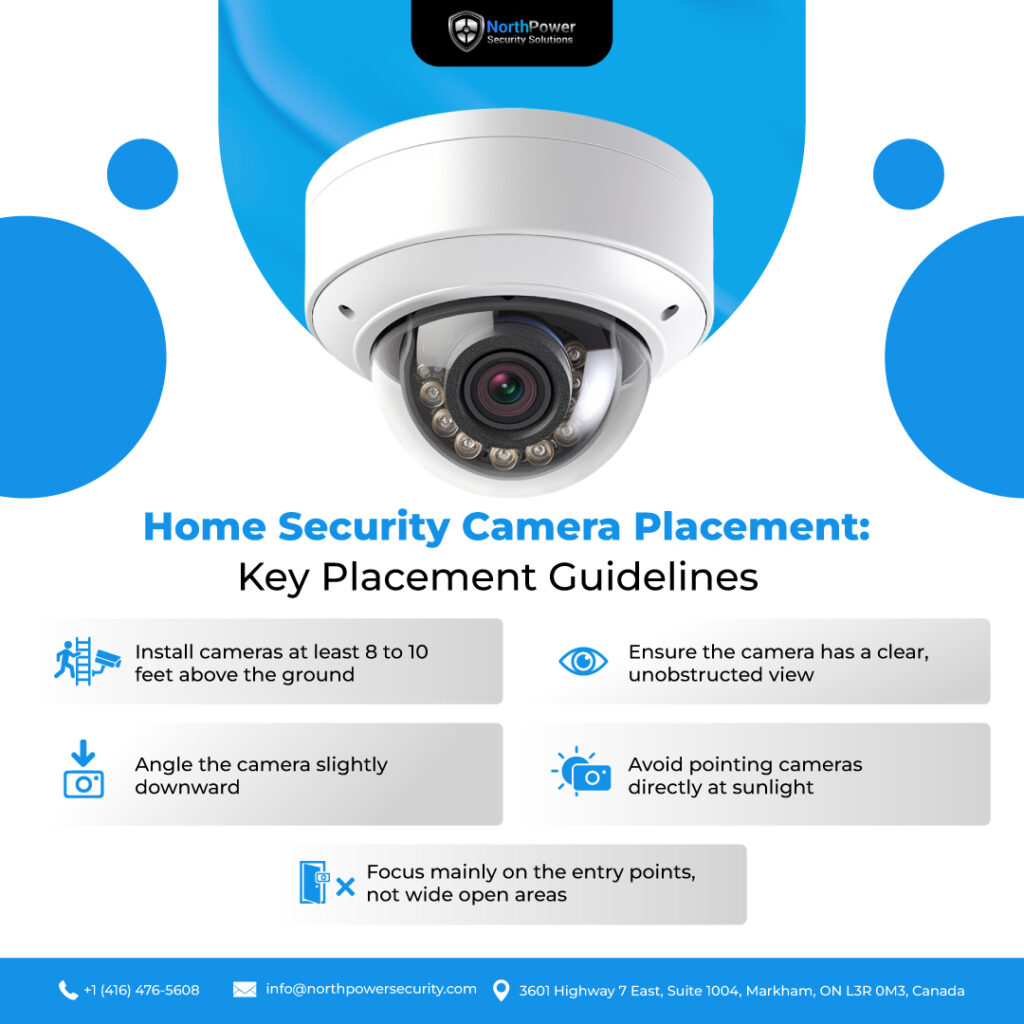
The basic rules for security camera placement include mounting cameras 8–10 feet high, angling them downward, focusing on entry points, avoiding sunlight glare, and ensuring a clear, unobstructed view.
Before choosing locations, follow these basic rules for security camera placement:
Key Placement Guidelines
- Install cameras at least 8 to 10 feet above the ground
- Angle the camera slightly downward
- Focus mainly on the entry points, not wide open areas
- Avoid pointing cameras directly at sunlight
- Ensure the camera has a clear, unobstructed view
A study by the University of North Carolina at Charlotte found that around 60% of convicted burglars avoid homes with visible security cameras, showing that correct placement also acts as a strong deterrent.
These rules apply whether you install home security cameras indoors or outdoors.
Where to Place Home Security Cameras Outside
Outdoor areas are the most important when planning security camera placement.
Front Door Camera Placement
The front door is the most common entry point for visitors and intruders.
Best placement tips:
- Install the camera above the door
- Angle it to capture faces clearly
- Avoid pointing directly at the street
- Make sure night vision is not blocked
A front door camera is essential when you install a security camera for home protection.
Back Door and Patio Placement
Back doors are often hidden from street view, making them a common target.
Placement tips:
- Mount the camera under the roof edge
- Cover the entire door area
- Avoid glare from outdoor lights
- Ensure motion detection works at night
This is a key part of exterior security camera installation.
Driveway and Garage Camera Placement
Driveway cameras help monitor vehicles and activity near your home.
Best practices:
- Mount the camera sideways for wider view
- Avoid aiming directly at headlights
- Cover entry and exit points
This setup improves overall CCTV camera coverage.
Side Yard and Windows
Side yards and ground-level windows are often overlooked.
Why they matter:
- Intruders avoid visible areas
- Side paths create blind spots
- Windows are common break-in points
Installing cameras here completes your home security camera placement plan.
How to Install Security Cameras Outdoors Correctly
Outdoor cameras face weather, dust, and lighting challenges.
Outdoor Installation Tips
- Use weather-rated cameras (IP65 or higher)
- Install under shade when possible
- Secure wiring or ensure strong Wi-Fi
- Mount cameras out of reach
Proper exterior security camera installation improves camera life and video quality.
Where to Place Home Security Cameras Indoors
Indoor cameras add an extra layer of protection.
Best Indoor Camera Locations
- Living room facing entrances
- Hallways leading to bedrooms
- Staircases
These areas help monitor movement without invading privacy.
Where NOT to Place Indoor Cameras
- Bathrooms
- Bedrooms
- Private guest areas
Responsible security camera placement respects personal privacy.
Common Security Camera Placement Mistakes
Avoid these mistakes when you install surveillance cameras:
- Mounting cameras too high
- Pointing cameras toward sunlight
- Blocking the view with walls or plants
- Ignoring night-time testing
- Covering empty space instead of entry points
Always test your cam placement during both day and night.
Final Thoughts
Security camera placement is more important than the camera itself. Proper planning ensures better video quality, fewer blind spots, and stronger protection.
When you install a security camerain the right place, it acts as both a recording device and a strong deterrent. Take time to plan your home security camera placement, test angles, and adjust for lighting conditions.
If you want full CCTV camera coverage, professional installation can help ensure your cameras protect what matters most.
Security Camera Placement FAQs
Where is the best place to put a security camera?
Front door, back door, driveway, and main walkways.
Where should CCTV be placed?
At entry points and areas people must pass through.
How to position the CCTV camera?
8–10 feet high with a slight downward angle.
Where not to put security cameras?
Bathrooms, bedrooms, or areas violating privacy.
Should a security camera go above or below a light?
Below the light to avoid glare.
Can security cameras work without internet?
Yes, with local storage. Remote access needs internet.
What are the mistakes for home security camera placement?
Wrong height, bad angles, glare, and blind spots.
Which is better: 3K or 4K CCTV?
4K provides better detail; 3K is sufficient for general use.
Is it better to have wired or wireless security cameras?
Wired cameras are more stable; wireless cameras are easier to install.