CCTV setup cost in 2026 varies based on cameras, AI features, storage, and installation. Homes typically spend $300–$2,500, while businesses can reach $20,000+.
1. Introduction
The cost of CCTV setup in 2026 varies more than most people expect. Two properties of the same size can end up with completely different bills depending on camera quality, installation complexity, storage choices, and feature requirements. According to industry analysis by Security Industry Association, factors such as higher camera resolutions, AI-based motion detection, and longer video retention policies are now among the biggest contributors to rising CCTV system costs. With rapid improvements in camera image resolution, AI detection, and cloud storage driven by increased global adoption of IP surveillance systems reported by IHS Markit CCTV pricing is no longer one-size-fits-all.
Residential users typically focus on basic monitoring and remote access, while commercial properties prioritize coverage, retention, compliance, and scalability. This difference alone creates a wide cost gap between home and business installations.
Quick Cost Snapshot (2026)
| Setup Type | Estimated Cost Range |
| Basic Home (DIY) | $300 – $800 |
| Mid-Range Home | $1,200 – $2,500 |
| Small Business | $2,500 – $6,000 |
| Large Commercial | $8,000 – $20,000+ |
2. How Much Does a CCTV Setup Cost in 2026?
2.1 Average Cost Breakdown
For homes, the security camera setup cost usually falls between affordability and convenience. A basic system with 2–4 cameras, standard resolution, and local storage keeps expenses low. Smart features and cloud storage raise the price but improve usability.
Small businesses often require higher camera counts, better night vision, and longer footage retention. Enterprise setups such as warehouses or multi-floor buildings involve professional design, structured cabling, and high-capacity NVRs, significantly increasing the cost of CCTV setup.
2.2 Cost by Number of Cameras
| Camera Count | Typical Cost |
| 1–2 Cameras | $300 – $900 |
| 4–6 Cameras | $1,500 – $3,500 |
| 8–16+ Cameras | $5,000 – $15,000+ |
More cameras don’t just increase hardware cost. They affect storage needs, bandwidth, installation time, and maintenance.
2.3 Monthly vs One-Time Costs
| Cost Type | One-Time | Monthly |
| Cameras & NVR | ✔ | ❌ |
| Installation | ✔ | ❌ |
| Cloud Storage | ❌ | ✔ |
| Monitoring | ❌ | ✔ |
| Maintenance | ❌ | ✔ (optional) |
3. Factors That Affect CCTV Setup Cost
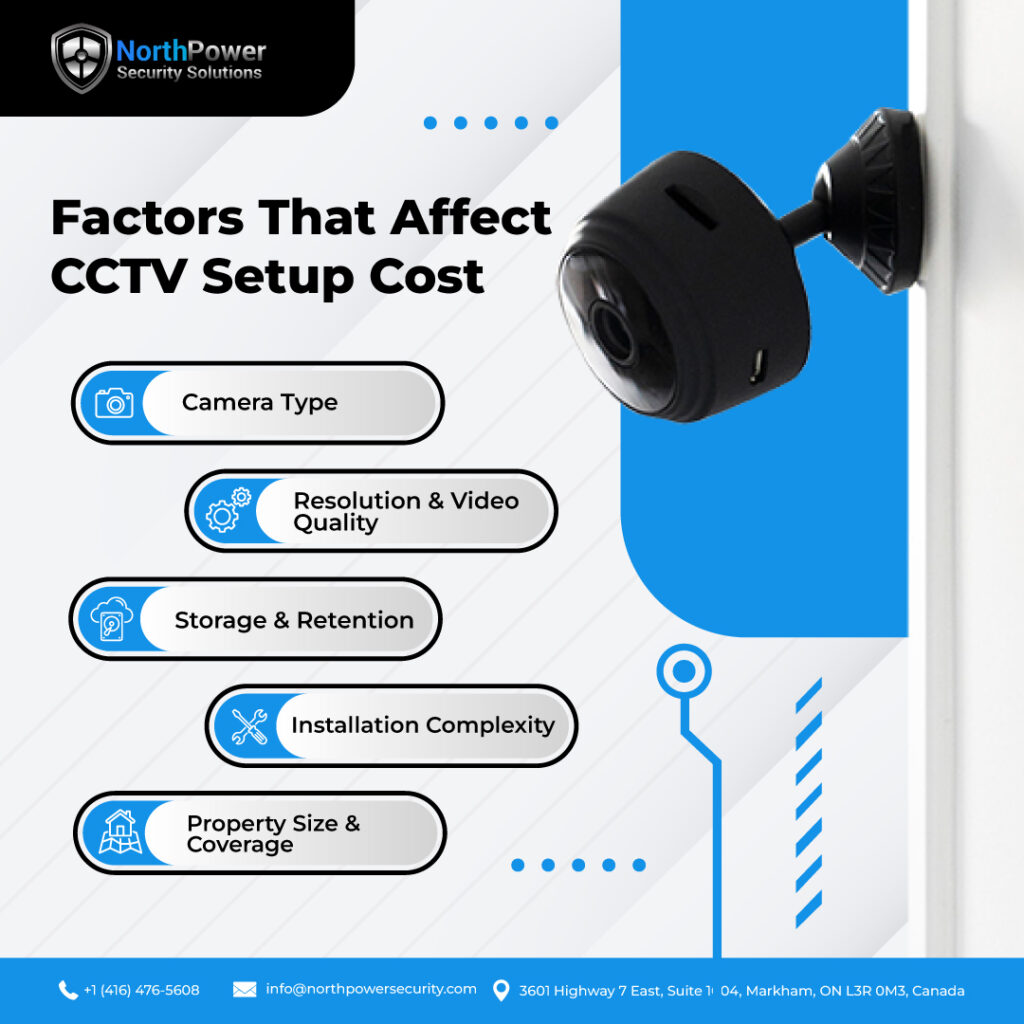
3.1 Camera Type
Indoor cameras are generally cheaper and easier to install. Outdoor and wired CCTV cameras cost more due to weatherproofing, cabling, and labor. IP cameras are now preferred over analog HD CCTV for better image quality and scalability.
3.2 Resolution & Video Quality
Higher camera image resolution directly increases the cost of CCTV setup.
1080p cameras are budget-friendly, while 2K and 4K (largest resolution camera options) deliver sharper footage but demand more storage and network capacity.
3.3 Storage & Retention
Local DVR/NVR storage is a one-time cost but limits retention. Cloud storage adds recurring costs but allows remote access, redundancy, and easier evidence retrieval. Longer retention periods mean higher storage expenses.
3.4 Installation Complexity
A single-story home with existing wiring costs far less than a multi-story building requiring drilling, conduit routing, and network upgrades. Complex installs increase labor costs more than camera prices.
3.5 Property Size & Coverage
Poor camera planning leads to blind spots and wasted spending. Proper coverage design ensures fewer cameras deliver better results, keeping the average cost of CCTV installation under control.
For a detailed breakdown of where cameras should actually be installed, see our complete guide on security camera placement for homes.
4. Additional Features That Increase CCTV Cost (But Add Value)
4.1 Smart & AI Features
AI motion detection reduces false alerts and improves security accuracy. Features like person and vehicle detection raise the cost but significantly enhance monitoring efficiency.
4.2 Night Vision & Low-Light Performance
Infrared cameras are standard, while color night vision costs more but provides better identification. Longer IR range means higher pricing.
4.3 Audio Recording
Two-way audio adds convenience but introduces legal considerations. Consent laws may affect system configuration and compliance costs.
4.4 Remote Access & Mobile Apps
Mobile apps with real-time alerts and playback are now expected. These features often require cloud subscriptions.
4.5 Solar-Powered & Backup Options
Solar security camera wireless systems reduce wiring costs but have higher upfront prices. Battery backups and UPS systems add reliability and extra expense.
5. Professional CCTV Setup Cost vs DIY Setup Cost
5.1 DIY CCTV Setup Cost
DIY systems typically cost $300–$1,500. They’re attractive for simple needs but often suffer from poor coverage planning and limited scalability.
5.2 Professional CCTV Installation Cost
Professional cost for surveillance cameras installation includes system design, camera placement, cabling, and warranties. Labor usually ranges from $80–$150 per camera.
5.3 Which One Is Better for You?
- Homeowners: DIY or hybrid setups work well
- Small businesses: Professional installation is safer
- Large properties: Professional setup is essential
6. What Hidden Costs Increase CCTV Setup Price?
Hidden CCTV costs include cable replacement, network upgrades, hard drive expansion, electrical work, software licenses, and future camera additions, which can significantly increase the final installation cost over time.
Cable Replacement & Upgrades
Older or low-quality cables often can’t support modern cameras and must be replaced. This adds extra material and labor costs. It can quietly increase the cctv fitting cost in older properties.
Network Switches & Bandwidth Upgrades
Multiple cameras strain basic routers. PoE switches or business-grade networking is often required. These upgrades are rarely included in initial pricing.
Hard Drive Replacement & Storage Expansion
CCTV hard drives run nonstop and wear out faster than normal drives. Expanding storage for longer footage retention adds recurring costs. Most systems need upgrades within a few years.
Electrical Work & Power Setup
Some camera locations need new power outlets or wiring. Outdoor installations may require weatherproof power solutions. Electrical work is usually charged separately.
Mounting & Structural Work
Concrete, brick, or metal surfaces need special mounts and drilling. These materials and extra labor raise installation time and cost. It’s often discovered during installation, not before.
Software Licenses & Subscriptions
Advanced features like mobile apps, AI detection, or cloud access may require paid licenses. These monthly or yearly fees add to long-term system cost.
Maintenance & Servicing
Cameras can shift, collect dust, or lose focus over time. Periodic servicing keeps footage usable. Without a maintenance plan, costs appear as unexpected service visits.
Camera Repositioning
Coverage gaps are often noticed after installation. Moving cameras requires extra labor and sometimes new cabling. This increases the final cost of CCTV setup.
Legal & Compliance Adjustments
Privacy or audio recording laws may require system changes. Businesses may need compliance updates. These adjustments can add unplanned expenses.
Future Expansion
Adding cameras later often requires bigger NVRs and stronger networks. Planning for expansion early is cheaper. Poor planning makes upgrades costly.
7. Cost-Saving Tips Without Compromising Security
Choose the Right Camera Count
Installing more cameras than necessary increases the cost of CCTV setup without improving coverage. Smart security camera placement allows fewer cameras to monitor key areas effectively. Proper planning reduces both hardware and cctv fitting cost.
Focus on Critical Areas First
Prioritize entrances, exits, and high-traffic zones when you set up CCTV cameras. This approach reduces unnecessary camera installations. It keeps the overall security camera setup cost practical and scalable.
Avoid Overkill Features
Not every property needs the largest resolution camera or advanced AI tools. For many homes and small businesses, HD or 2K cameras provide sufficient clarity. Skipping premium features lowers the upfront and long-term cost of CCTV setup.
Plan for Future Expansion
Choose systems that support additional cameras without replacing the NVR. Scalable designs reduce future cost for surveillance cameras installation. This is especially important for growing properties or building CCTV systems.
Use Wired Systems Where Possible
Wired CCTV cameras offer stable connections and don’t require battery changes. While installation may cost slightly more initially, they reduce maintenance expenses. Over time, this lowers the average cost of CCTV installation.
Limit Cloud Storage Duration
Long retention periods increase subscription fees. Shorter storage windows reduce recurring costs while keeping essential footage accessible. This helps control the ongoing security camera setup cost.
Bundle Installation & Maintenance
Some installers offer bundled packages for setup and servicing. This reduces individual service charges and maintenance visits. Bundling can significantly lower total cctv fitting cost over time.
Get a Professional Site Survey
A site survey helps identify blind spots and avoid unnecessary cameras. Correct camera planning prevents reinstallation costs. It’s one of the most effective ways to reduce the cost of CCTV setup without sacrificing protection.
8. Legal & Compliance Considerations (Cost Impact)
Audio Recording Laws
Many regions restrict or prohibit audio recording without consent. Enabling microphones may require legal review or feature disabling. These adjustments can increase the cost of CCTV setup, especially for commercial properties.
Camera Placement & Privacy Rules
Cameras must not record neighboring properties, public sidewalks, or private areas like restrooms. Incorrect placement may require repositioning or removal. This adds unexpected labor and increases cctv fitting cost.
Commercial Compliance Requirements
Businesses often must meet workplace privacy and data protection regulations. Compliance may require signage, access controls, or limited footage retention. These requirements raise the overall security camera setup cost.
Footage Storage & Data Protection
Commercial CCTV footage may need encrypted storage and controlled access. This can require upgraded NVRs or cloud plans. Data protection rules directly impact long-term cost for surveillance cameras installation.
9.Is CCTV Worth the Cost in 2026 for Homes and Businesses?
Value for Homes
For homeowners, CCTV provides strong deterrence and reliable evidence during incidents. Modern systems offer remote monitoring and alerts at a reasonable cost of CCTV setup. The peace of mind often outweighs the investment.
Value for Businesses
Businesses benefit from theft prevention, employee safety, and liability protection. Many insurers offer lower premiums for professionally installed building CCTV systems. Over time, these savings offset the initial security camera setup cost.
Long-Term ROI
CCTV systems typically last 5–10 years with proper maintenance. Preventing even one major incident can recover the full average cost of CCTV installation. In 2026, CCTV remains a practical and cost-effective security solution.
10. Final Cost Summary Table
| Setup Type | DIY | Professional |
| Home | $300–$1,200 | $1,500–$3,000 |
| Small Business | $1,000–$3,000 | $3,000–$7,000 |
| Commercial | ❌ | $8,000–$20,000+ |
11. FAQs
A basic CCTV system costs between $300 and $900 in 2026. The price depends on the number of cameras, resolution, and whether storage is local or cloud-based. DIY systems are cheaper, while professional installs cost more.
No, but it improves accessibility, backup, and evidence security.
Yes. Local DVR/NVR systems work offline.
Most systems last 5–10 years with proper maintenance.
Want to know exactly how much it will cost to secure your property with a CCTV system?
Book a site survey or request a custom quote with North Power Security, and get a free cost assessment tailored to your needs!